I engineer Android systems on platforms that secure 1M+ corporate devices.
Software engineer specialized in Android, certified by Google as an Android Enterprise Expert. I build the hard side of mobile: system-level agents, real-time streaming with WebRTC, sensor and hardware integrations, apps that survive OEM chaos. I work directly with manufacturers and with Google. Technical reference for Android at scale and for developers building a career in programming.Google-certified Android Enterprise Expert. Technical reference for Android at scale and programming careers.
Enterprises running Android at scale need absolute control via Device Owner: locate, lock, wipe and restrict any device, anywhere, without breaking user experience or OEM compatibility.
Constraints
Dozens of OEM implementations, aggressive battery managers, strict security requirements (encryption, 2FA, certificate management) and zero tolerance for downtime on devices used in the field.
My role
I spent years evolving the MDM agent at the platform's core on the Android Management API and building a policy engine into it: remote lock/unlock/wipe, silent app install with staged rollouts, hardware restriction (camera, mic), password and Wi-Fi policies. Everything shipped within Google Play policies, and OEM-specific behavior was resolved directly with manufacturers and Google.
Result
The agent became the core of a platform controlling 1M+ devices, with corporate data secured and the entire device ecosystem managed from a single console.
Support teams lose hours guiding field workers over the phone. They needed live screen mirroring and remote control of any corporate device, in real time.
Decision
Screen mirroring over WebRTC with peer-to-peer (P2P) connections between console and device, touch control via input injection, and permission models that survive OEM variance. Sessions are secure and low latency stays good enough for live operation.
Result
Support resolution moved from phone calls to direct remote operation, and it has been a flagship capability of the platform since 2020.
A general-purpose browser on a corporate device is an open door: uncontrolled navigation, data leakage, compliance risk.
Decision
A purpose-built managed browser where every capability is a policy: domain allowlist, kiosk mode, session rules, all governed from the same MDM console as every other corporate device.
Result
Navigation became a managed surface. In production at scale since 2019.
04 / RECOGNITION
The global Android Enterprise Recommended badge
Android Enterprise Recommended · Compliance Checklist · Google Engineering
Context
Google's Android Enterprise Recommended program certifies management platforms against a long compliance checklist of strict requirements. At the time, only 11 companies in the world held the global badge, among them Samsung and IBM.
My role
I led the development of around 58 features needed to meet Google's compliance checklist, delivered in record time, dealing directly with Google's engineering team. I was also the first person at the company certified as an Android Enterprise Expert and the one who started its Android Enterprise practice. The requirements are revalidated every year, and that renewal with Google runs through me.
Result
The platform earned the global badge and joined a group of 11 companies worldwide, alongside Samsung and IBM, with an honorable mention from Google for the fastest implementation of the requirements in Latin America.
What I take ownership of/ 02
Deep on Android, fluent across the rest of the system.
A·01
Enterprise & MDM architecture
Device policy, silent provisioning, OEM negotiation, AOSP internals. The invisible layer that makes thousands of devices governable.
A·02
Mobile security & compliance
Encryption, certificate management, 2FA, LGPD-aware data handling. I design security into the system from the start, instead of auditing it at the end.
A·03
Real-time, sensors & hardware
WebRTC with P2P streaming, input injection, Android broadcasts, sensor integrations, camera and mic control, in apps that need to interact with the physical world.
Linters and static analysis as CI gates, code coverage tracked per module, a testing culture built on MockK, and code reviews that help the whole team learn.
B·03
CI & release engineering
Continuous Integration pipelines, reproducible builds, Google Play policy compliance and staged rollout strategies, so releases go out safely and often.
C·01
Technical leadership
Technical interviews, onboarding, mentoring juniors, ADRs and decision records. I raise the bar of the team around me.
C·02
Founder's judgment
Co-founded and shipped Local Chat to 20k+ users (registered trademark). I weigh technical decisions against time-to-market and business value.
C·03
AI-assisted engineering
I work with frontier AI models every day to shorten delivery cycles. Everything still passes through a senior review, and the architecture calls remain mine.
About/ 03
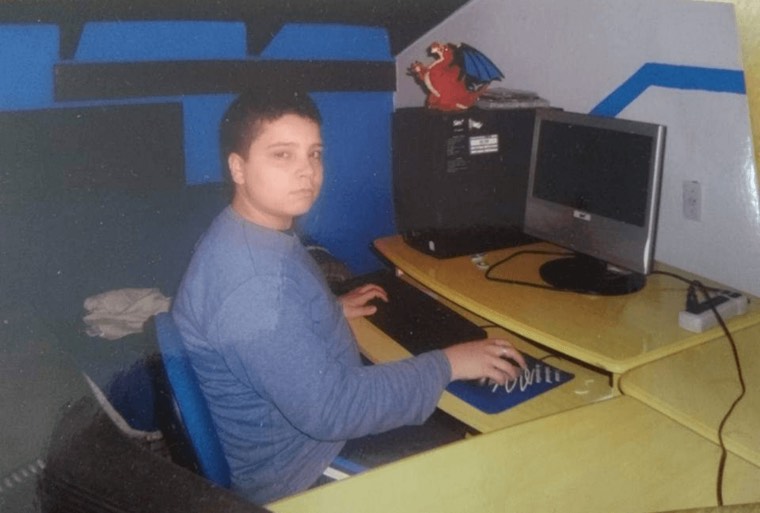
From a computer paid in 24 installments to 1M+ devices.
In 2013, at fourteen, my biggest dream was a computer. My mother fought to buy one, paid in 24 installments. It broke more than it worked, there was no internet, and that was exactly the point: I learned to fix, not to break. Soon I was repairing machines around the neighborhood, self-taught and already charging for it. Programming came a little later, by accident: I found some old HTML handouts, worked through them page by page, and curiosity has kept me writing code ever since.
2013 · the first computer, paid in 24 installments
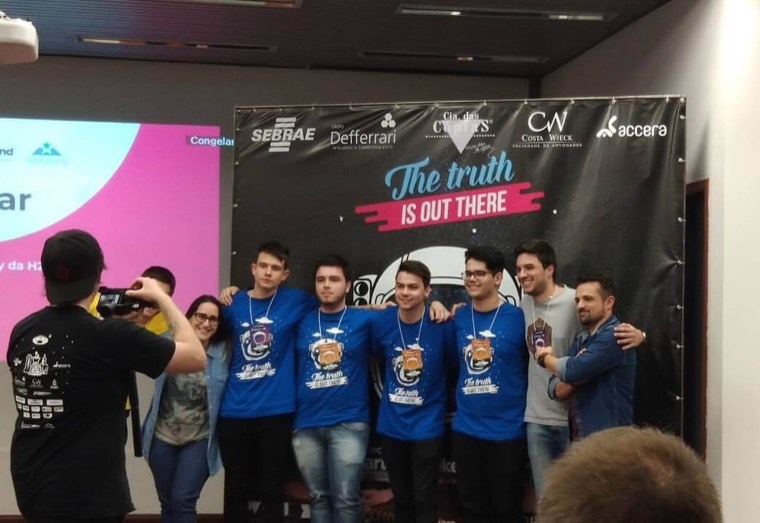
That curiosity became a career. I went from a technical course to co-founding Local Chat, a location-based social network that reached 20,000+ users and appeared at events with some of Brazil's best-known artists. Along the way we won Startup Weekend, the global 54-hour competition where an idea has to leave the weekend as a working business; standing on that stage, still at the start of my career, confirmed the path. From there I moved into the hardest problem I have found in mobile: making Android obey at enterprise scale.
STARTUP WEEKEND · winning team on stage, early career
More than a decade later, systems I engineer on employer platforms secure over one million corporate devices, and I still write code every day.
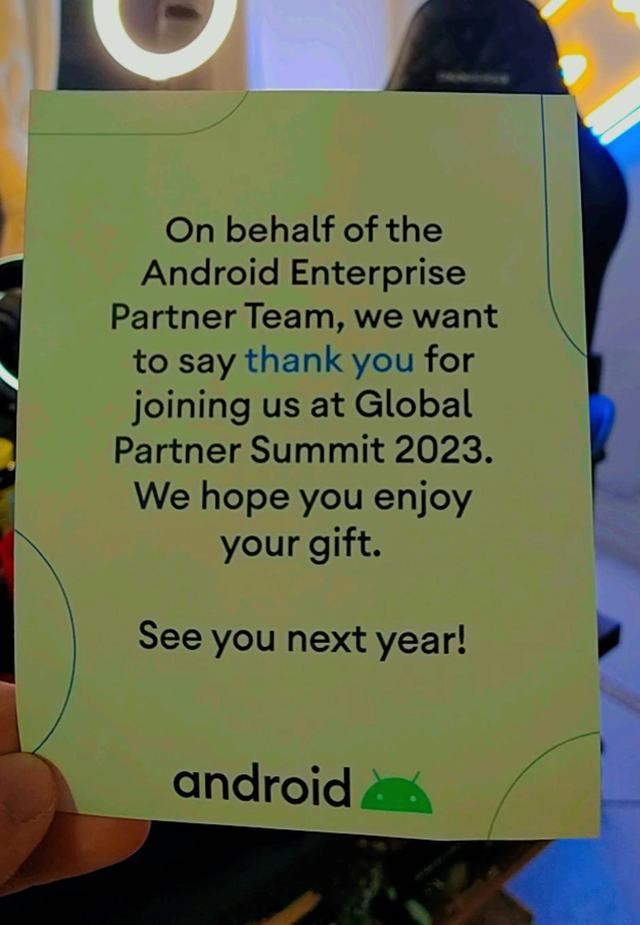
Specializing in Android since 2017, I grew from junior to senior and technical reference on one of Latin America's leading device-management platforms: leading strategic deliveries, running technical interviews, and acting as the liaison for complex issues directly with OEMs and Google. I was the first person at the company certified as an Android Enterprise Expert and led the work that earned the global Android Enterprise Recommended badge, held by only 11 companies in the world at the time. I renew the certifications and the badge requirements with Google every year.
GOOGLE · Android Enterprise Global Partner Summit, 2023
Because I remember how hard the path was, I also teach it: I mentor Android developers through LeCode, the education project I founded, publish daily programming and career content on Instagram, and authored learning guides used by developers starting their careers. Technical reference for Android at scale and for developers building a career in programming. In the industry, people just call me Leva.
Gustavo is that professional all big companies would like to have. Committed to deliveries, he has an owner mentality in what he proposes to accomplish.
Arthur ProençaMentor · AI-First Enterprises
“
Gustavo has the profile I expect from the members of my team: focused on delivery with quality, not only on delivery.
Vinícius Maciel PrimãoLead Software Engineer · SAP
“
Beyond deep technical competence, he's the kind of person who makes work better: sharp conversations about product, technology and career. You rock, Gustavo!
Lucas PifferCEO · Inteligov
São Paulo · after hours
From where I work, you can see far.
Common questions/ 05
Things I get asked all the time.
For companies & recruiters
Why is Android so hard to manage at scale?
+
Because Android is not one system. Every manufacturer ships its own variation, with its own battery manager killing background processes and its own quirks in the management APIs. Multiply that by thousands of devices in the field and any small inconsistency becomes an outage. I spent the last decade inside this problem, and a good part of it was solved in conversations with the OEMs themselves.
What makes a good senior Android developer?
+
Look for evidence, not buzzwords. Has the person shipped systems that run on real devices, at real scale? Do they understand what lives underneath the framework? Can they explain a decision in writing and help a junior grow? Certifications help too, when they are verifiable. If you want to see what that looks like in practice, my history is on this page and on LinkedIn.
What is MDM and what is it for?
+
MDM (Mobile Device Management) is the software layer a company uses to govern its phones and tablets: locating and locking devices, distributing apps silently, enforcing security policies and wiping corporate data when a device is lost. On Android, it is built on the Android Enterprise APIs, the technology behind the case studies on this page.
Does Gustavo do talks, mentoring or technical interviews?
+
Yes. I speak and write about Android at scale, device security and engineering careers, including articles on Medium, mentor developers through LeCode, and have run technical interviews for years. For invitations or a good conversation, write to contato@gustavolevandowski.com.
What is Android Enterprise and Android Enterprise Recommended?
+
Android Enterprise is Google's set of APIs and management modes for governing corporate devices: Device Owner, Work Profile, policies, silent app install and remote wipe. Android Enterprise Recommended is Google's certification program for management platforms that meet a strict compliance checklist. I led around 58 features that earned my employer's platform the global badge and renew those requirements with Google every year.
What is Device Owner and Work Profile on Android?
+
Device Owner is a fully managed mode where the company controls the entire device through an MDM agent and the Android Management API. Work Profile separates corporate apps and data from personal use on the same phone. Both are core Android Enterprise building blocks behind locate, lock, wipe, silent install and policy engines at scale — the stack behind the cases on this page.
What does a senior Android engineer need beyond the app layer?
+
Beyond screens and ViewModels: OEM variance, battery managers, permissions, release engineering, observability, security policies and how the system behaves in the field. At enterprise scale that includes Device Owner, policy engines, WebRTC remote control, kiosk mode and direct work with manufacturers. That is the layer I engineer on employer platforms protecting 1M+ devices.
For those starting out
How do I start a career in programming?
+
Pick one language and build small, real things with it. Publish what you build, even when it feels too simple. What carried me from a broken computer to where I am was consistency, not talent. This is what I teach at LeCode, the education project I founded, and what I post about every day on Instagram at @lecode.oficial.
Do I need a degree to work in programming?
+
No, it is not a requirement. What opens doors in this field is what you can build: published projects, practical skills and how you perform in a technical interview. I came from a technical course, not a degree, and grew to senior with Google certifications. A degree can help, but it is not what gets you hired.
Do I need to be great at math to code?
+
No. Day-to-day programming is much closer to building logical routines than to advanced math. I am not a genius; I am persistent, and that made all the difference. If you can follow a recipe and then improve it, you can learn to program.
Do I need a powerful computer to start coding?
+
Not to start. Programming logic can be learned on any basic machine. My first computer was paid in 24 installments and broke more than it worked, and that is where everything started. Better hardware only becomes necessary later, when your projects grow.
How long does it take to get a first job as a programmer?
+
With consistent study, about an hour every day, one year is a realistic milestone for a first opportunity. It varies from person to person, and you should distrust anyone promising three months. The profession is built with dedication, and it rewards the effort well over time.
Why learn Android development?
+
Because Android is everywhere: phones, payment terminals, cars, watches and the corporate devices I work with. It is a global market with strong demand and fewer specialists than web development, which leaves real room to grow. I have worked on it for a decade, and the guides I write at LeCode exist to shorten that path for whoever is starting.
Kotlin or Java for Android in 2026?
+
Kotlin is the default for new Android work: safer null handling, less boilerplate and first-class support from Google. Java still appears in legacy codebases and AOSP-level modules, so a senior engineer reads both. I ship production agents and platform features primarily in Kotlin, and go to AOSP depth when OEM behavior demands it.
How do I prepare for an Android technical interview?
+
Ship small real projects, explain architecture decisions in writing, and go deeper than UI: lifecycle, concurrency, networking, security and what happens under the framework. Practice walking through trade-offs out loud. I have run technical interviews for years and mentor candidates through LeCode on exactly that evidence-based approach.
Contact/ 06
Hard Android problems are my territory. Let's find north.
I take on selected projects and consulting outside the MDM market: real-time and WebRTC, sensor and hardware integrations, mobile security, CI and release engineering. Talks, mentoring and technical interviews are also welcome. Send a message.